
Complete Guide
The Complete Gut Health Guide: Digestion, Microbiome Support, and Daily Nutrition
Gut health plays a central role in how your body functions each day. When digestion feels off, even simple routines like eating or staying energized can feel less predictable.

The digestive system is not just a single process. It is a coordinated system that includes digestion, nutrient breakdown, and the balance of microorganisms that live in the gut. These elements work together continuously, influenced by what you eat, how you eat, and how consistent your daily habits are.
This complete gut health guide provides a clear and practical understanding of how digestion works and what may support it.
Throughout this guide, you will learn how to support digestive health through food choices, daily habits, and targeted supplementation.
Quick Summary
- Gut health affects digestion, nutrient processing, and daily comfort
- A stable digestive system depends on consistent daily habits
- Common challenges include bloating, irregular patterns, and food sensitivity
- Fiber, probiotics, and prebiotic foods play a key role in digestive wellness
- Hydration supports how food moves through the digestive system
- Daily habits such as eating slowly, managing stress, and maintaining sleep matter
- Supplements can support a routine, but work best alongside consistent habits
- Small, repeatable actions over time lead to more stable and predictable digestion
What Gut Health Actually Means
Gut health refers to the overall function and balance of the digestive system, including the stomach, small intestine, and large intestine. These organs work together to break down food, process nutrients, and move waste through the body.
This system operates continuously throughout the day, responding to what you eat, how you eat, and how consistent your routine is. When digestion is supported, it tends to feel stable and predictable. When it is not, even small disruptions can affect daily comfort.
The Role of the Gut Microbiome
Inside the digestive system lives a complex community of microorganisms known as the gut microbiome. This includes trillions of bacteria that interact with the food you consume and the environment within your gut.
These microorganisms play a role in how food is processed and how nutrients are made available to the body. Balance within this system matters. When the microbiome is more stable, digestion tends to feel more consistent over time.
How Gut Health Shows Up Day to Day
When people talk about gut health, they are usually referring to how their body feels daily.
This may include:
- Comfortable digestion after meals
- Regular and predictable daily habits
- Steady energy levels throughout the day
- A general sense of balance after eating
These signals are not based on a single factor. They reflect how well multiple systems are working together at the same time.
Gut Health Is Built Through Consistency
Gut health is not defined by one meal, one supplement, or one habit. It is the result of consistent daily inputs over time.
Key factors that influence gut health include:
- Food choices and nutrient intake
- Hydration levels
- Daily routine and meal timing
- Sleep patterns
- Stress levels
Supporting gut health means supporting these areas in a steady and repeatable way, rather than relying on short-term changes.
Why Gut Health Matters for Daily Wellness
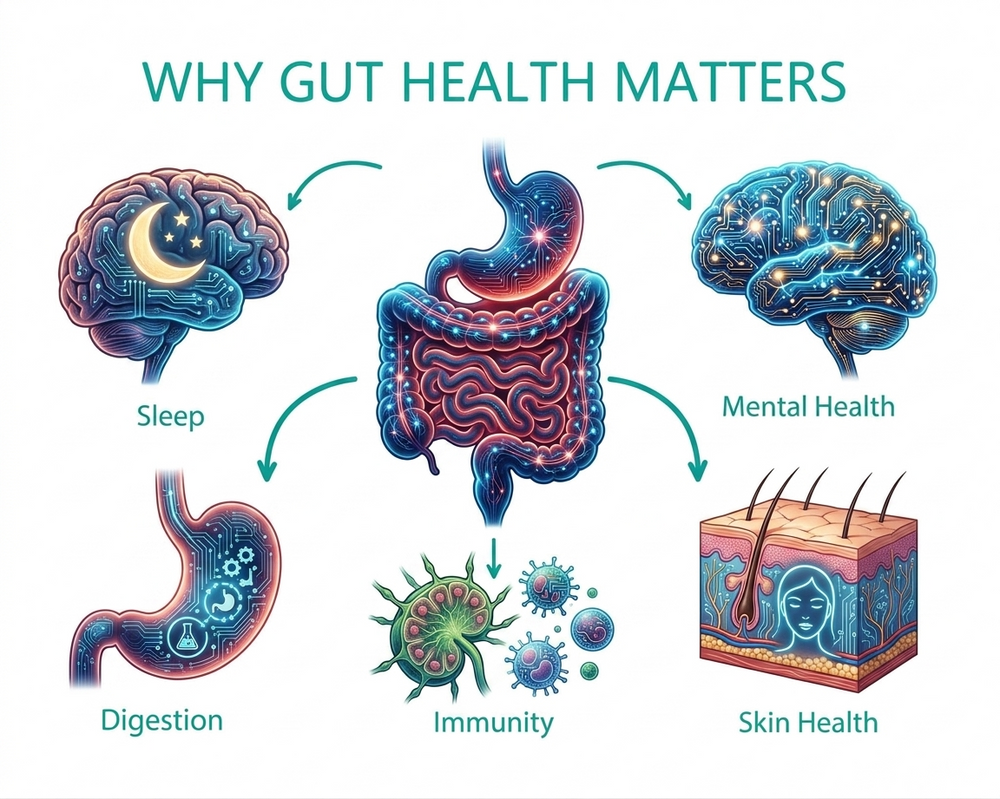
The digestive system does more than process food. It supports how your body uses nutrients and maintains balance throughout the day.
When digestion is working smoothly, meals feel easier to manage, and daily routines feel more stable. When it is not, small issues can affect how you feel both physically and mentally.
Early Signs Often Show Up Subtly
Many people first notice gut-related changes through small, everyday signals.
These may include:
- Occasional discomfort after meals
- Changes in appetite or eating patterns
- Fluctuations in energy levels
- A general sense of imbalance
These experiences are common, but they highlight how closely digestion is connected to overall wellness.
Nutrient Absorption Depends on Gut Health
The body relies on the digestive system to break down food and make nutrients available for use.
Even when meals are balanced, nutrients such as vitamins and minerals need a stable digestive environment to be properly processed. This is why supporting gut health is often part of maintaining a consistent nutrition routine.
Common Digestive Challenges People Experience
Even in well-structured routines, the digestive system can respond to changes in diet, timing, and daily habits. Understanding these common experiences helps build awareness and supports a more consistent approach over time.
Occasional Bloating and Discomfort
Occasional bloating is one of the most commonly reported digestive concerns. It often appears after larger meals, unfamiliar foods, or periods where routine habits change.
This sensation can feel like fullness, tightness, or pressure in the abdomen. While uncomfortable, it is usually temporary and tends to resolve as the body processes the meal.
Bloating often reflects how the digestive system responds in the moment rather than a long-term issue. Patterns over time are more important than isolated experiences.
Irregular Daily Digestive Patterns
The digestive system tends to function best with consistency. When routines change, digestion may become less predictable.
This can show up as:
- Variability in timing from day to day
- Changes in how the body feels after meals
- A general sense that digestion is less steady than usual
Travel, schedule changes, and shifts in eating habits are common reasons for this. These fluctuations are typically temporary, but they highlight how closely digestion is tied to daily structure.
Sensitivity to Certain Foods
Some people notice that specific foods feel harder to tolerate than others. This is often described as food sensitivity.
These reactions are highly individual. A food that feels completely fine for one person may feel uncomfortable for another. Common patterns include:
- Feeling overly full after certain meals
- Discomfort linked to specific ingredients
- A need to adjust portion sizes or timing
Tracking meals and how you feel afterward can help identify patterns over time. For persistent or more severe reactions, professional guidance is recommended.
Feeling Less Comfortable After Meals
Another common experience is a general sense of discomfort after eating. This may include heaviness, sluggishness, or a lack of ease following a meal.
This does not always point to a specific issue. In many cases, it reflects how the body is responding to:
- Meal size
- Eating speed
- Timing of meals
These small factors can influence how digestion feels day to day, even when food choices remain similar.
Changes in Energy After Eating
Some people notice shifts in energy levels after meals. This may feel like a temporary dip in energy or a sense of fatigue shortly after eating.
This experience varies widely and can depend on:
- Meal composition
- Portion size
- Timing throughout the day
While occasional changes in energy are common, consistent patterns can signal that the body is responding differently to certain eating habits.
Important Nutrients for Digestive Wellness

A well-rounded diet forms the foundation of digestive wellness. While overall eating patterns matter most, certain nutrients play a more direct role in supporting how the digestive system ng a variety of fiber sources in the daily diet helps support a structured and consistent approach to eating. Rather than relying on a single source, combining different types of plant foods tends to provide a more balanced intake over time.
Probiotic Sources
Probiotic-containing foods introduce live cultures that are commonly associated with digestive wellness routines. These are typically found in fermented foods such as yogurt, kefir, sauerkraut, kimchi, mifunctions day to day.
Focusing on these key areas helps create a more consistent and balanced routine, especially when intake varies or appetite changes over time.
Fiber
Fiber is one of the most widely discussed nutrients in digestive wellness. It is naturally found in plant-based foods such as vegetables, fruits, whole grains, legumes, nuts, and seeds.
Includiso, and kombucha.
For those who do not regularly include fermented foods in their meals, a daily probiotic supplement may offer a more consistent way to include these elements in a routine.
Prebiotic Foods
Prebiotic foods provide a source of nourishment for the beneficial bacteria already present in the digestive system.
Common sources include:
- Garlic and onions
- Leeks and asparagus
- Bananas and apples
- Oats and other whole grains
Including a mix of prebiotic and probiotic foods is often viewed as a balanced approach to supporting overall digestive patterns.
Hydration
Water plays a direct role in how the digestive system functions. Adequate fluid intake helps maintain comfort and supports how food moves through the digestive process.
Consistent hydration throughout the day is generally more effective than consuming large amounts at once. This becomes especially important when dietary habits change or when adding new elements to a routine.
Amino Acids
Amino acids are components of protein that are involved in many processes within the body. One example often discussed in digestive wellness routines is L-glutamine.
L-glutamine is naturally found in protein-containing foods and is also available as a supplement. It is commonly included as part of a broader daily routine, particularly for those looking to maintain consistency in their overall intake.

L-Glutamine


How Fiber Supports the Digestive System
Fiber is one of the most important nutrients in digestive wellness. Unlike other carbohydrates, it is not fully broken down by the body, which allows it to move through the digestive system in a more intact form. This unique characteristic is what makes fiber such a central part of a consistent daily routine.
As fiber moves through the digestive tract, it contributes to structure and consistency within the overall process. This helps create a more predictable and stable digestive pattern over time, especially when intake is consistent.
Types of Fiber and How They Differ
There are two main types of dietary fiber, and both play a role in a balanced approach.
Soluble fiber dissolves in water and forms a gel-like substance as it moves through the digestive system. It is commonly found in foods such as oats, apples, citrus fruits, beans, and psyllium husk.
Insoluble fiber does not dissolve in water. Instead, it adds structure and bulk to the diet. It is found in whole grains, nuts, seeds, and many vegetables.
Including a mix of both types of fiber through a variety of foods helps create a more balanced intake rather than relying on a single source.
Daily Fiber Intake and Consistency
Most adults do not consistently reach recommended daily fiber levels through food alone. General guidelines suggest around 25 to 38 grams per day, though individual needs may vary depending on diet and lifestyle.
Rather than focusing on large increases all at once, a gradual approach tends to be more sustainable. Small additions throughout the day can make a meaningful difference without disrupting routine.
Practical Ways to Increase Fiber Intake
Building fiber into daily habits does not need to be complicated. Simple adjustments can help make intake more consistent over time.
Examples include:
- Adding ground flaxseed or chia seeds to breakfast
- Choosing whole fruits instead of juices or processed snacks
- Including beans or legumes in meals a few times per week
These small changes are easy to repeat and can add up over time without requiring major shifts in eating patterns.
When to Consider a Fiber Supplement
For individuals who find it difficult to meet their fiber needs through food alone, a fiber supplement may be a practical addition.
Psyllium husk powder is one commonly used option that can be mixed into water, smoothies, or other beverages. It has been included in daily routines for many years due to its ease of use and flexibility.
When adding any new fiber source, increasing intake gradually and maintaining consistent fluid intake is generally recommended. This helps the body adjust more comfortably and supports a more stable experience over time.
The Role of Probiotics in a Daily Routine
Probiotics are live microorganisms that are commonly included in digestive wellness routines. They are naturally present in fermented foods and are also available as supplements in capsule, gummy, and powder forms.
Including probiotics as part of a daily routine is often focused on consistency rather than quantity. Regular intake helps create a more stable and repeatable habit, especially when combined with a balanced diet and structured daily habits.
Understanding Probiotic Formats
Probiotics are available in different formats, each suited to different preferences and routines.
Capsules are one of the most common options and are typically used for their convenience and consistency. Gummy probiotics offer a more approachable format, especially for those who prefer an alternative to traditional capsules. Powder forms can be mixed into drinks or smoothies, making them flexible for different routines.
The choice often comes down to what is easiest to maintain daily rather than a single “best” option.
CFU Count and Strain Variety
Probiotic supplements can vary widely in both strain types and colony-forming units (CFUs). CFUs refer to the number of live microorganisms in each serving.
Some products, such as 30 billion CFU probiotics, are chosen by individuals who prefer higher-count options. Others may opt for standard formulations that align more comfortably with their routine.
Rather than focusing only on numbers, it is often more practical to choose a product that fits consistently into daily habits.
Why Consistency Matters
Probiotics are typically used as part of a long-term routine rather than a short-term addition. Taking them regularly helps maintain a consistent pattern, which is often more effective than occasional use.
Many people find it helpful to pair probiotics with an existing habit, such as taking them with breakfast. This reduces the likelihood of missing doses and makes the routine easier to sustain over time.
Starting and Adjusting Your Routine
For those new to probiotics, starting with a standard daily serving and allowing time for adjustment is a practical approach. The body may take time to adapt to new additions, especially when introducing them alongside other dietary changes.
Building the habit gradually and keeping the routine simple makes it easier to maintain consistency without unnecessary complexity.
A Practical Approach
Probiotics work best as part of a broader routine that includes consistent meals, hydration, and balanced food choices. They are not meant to replace these habits, but to fit alongside them.
Focusing on simplicity, consistency, and a format that suits your lifestyle helps make probiotics a sustainable part of daily digestive wellness.
ADK supplements are often included in routines that focus on:
- Bone wellness
- Daily nutrient balance
- General wellness support
Because these are fat-soluble vitamins, it is a good idea to follow recommended serving sizes and speak with a healthcare professional when needed.
Prebiotics and the Gut Microbiome
Prebiotics are often discussed alongside probiotics, but they serve a different purpose. While probiotics introduce beneficial microorganisms, prebiotics act as a source of nourishment for the bacteria already present in the digestive system.
These compounds are typically found in plant-based foods and are part of a balanced dietary approach. Including prebiotic foods regularly helps create a more supportive environment for the gut microbiome over time.
Common Food Sources of Prebiotics
Many everyday foods naturally contain prebiotic fibers. These include:
- Garlic, onions, and leeks
- Asparagus and bananas
- Oats and apples
- Chicory root and other plant-based sources
Including a variety of these foods across meals during the week helps support consistency rather than relying on a single source.
Building Variety Into Daily Intake
A diverse intake of plant-based foods is often emphasized in discussions around the gut microbiome. Rotating different fruits, vegetables, and whole grains can help create a more balanced and sustainable approach.
For individuals who find it difficult to maintain variety through food alone, certain supplement formats may offer a practical way to support daily intake.
Where Supplements May Fit In
Super greens supplements often include blends of vegetables, fruits, and plant extracts. These can be incorporated into a routine as a convenient option when dietary variety is limited.
Gummies and powders are commonly used formats, allowing flexibility depending on individual preference. As with any addition, consistency tends to matter more than occasional use.

Super Greens Gummies


Hydration and Its Connection to Digestion
Hydration plays a direct role in how the digestive system functions. Adequate fluid intake helps maintain comfort and supports the movement of food through the digestive process.
Even small changes in hydration levels can affect how digestion feels on a day-to-day basis, making consistency an important factor.
Building Consistent Hydration Habits
Rather than focusing on large amounts of water at once, steady intake throughout the day is generally more effective.
Simple habits include:
- Drinking water with meals
- Sipping between meals
- Increasing intake during physical activity
Paying attention to natural signals such as thirst can also help guide daily intake.
Hydration and Daily Routine Changes
Hydration needs may vary depending on activity level, environment, and dietary changes. When routines shift, maintaining consistent fluid intake helps support overall balance.
This becomes particularly relevant when introducing new dietary elements or adjusting daily habits, as fluid intake plays a supporting role in how the body adapts.
Additional Considerations
Caffeine and alcohol can influence hydration levels, so adjusting water intake accordingly can help maintain consistency.
In certain situations, such as increased activity or warmer conditions, electrolyte-containing drinks may be included as part of a broader hydration approach.
A Practical Approach
Hydration is most effective when it becomes part of a daily routine rather than something addressed occasionally. Small, consistent habits help support a more stable and comfortable digestive experience over time.
Lifestyle Habits That May Support Gut Wellness
Diet and supplements are important, but daily habits play an equally meaningful role in how digestion feels over time. Many of these habits are simple, require no cost, and can be built gradually into a routine.
Focusing on consistency rather than perfection helps make these habits easier to maintain.
Eating Slowly and Chewing Thoroughly
Digestion begins in the mouth. Taking the time to chew food thoroughly helps break it down before it reaches the stomach.
Eating more slowly also allows the body to respond more naturally to meals. This can make the overall experience feel more comfortable and predictable.
Managing Daily Stress Levels
Stress is a normal part of life, but ongoing stress can influence how the body functions day to day, including digestion.
Simple habits such as:
- Taking short breaks during the day
- Practicing deep breathing
- Spending time walking or unwinding
can help create a more balanced daily rhythm.
Staying Physically Active
Regular movement supports overall wellness, including how the body processes daily routines.
This does not need to be intense. Consistent, moderate activity such as walking, stretching, or light exercise can be easier to maintain and more effective over time.
Maintaining a Consistent Sleep Routine
Sleep plays a broader role in daily wellness than many people realize. Irregular sleep patterns can affect how the body feels throughout the day, including digestion.
A consistent sleep schedule, with a focus on regular timing and adequate rest, helps support overall balance.
Building a Daily Gut Health Routine
A practical routine does not need to be complicated. The most effective approach is built around a few consistent habits that are easy to repeat each day.
Rather than focusing on perfection, the goal is to create a structure that supports consistency over time.
Morning
Start with a glass of water. Have a fiber-focused breakfast such as oatmeal with fruit or a smoothie. Take a probiotic if it fits your routine.
Midday
Stay hydrated and keep meals balanced with whole foods. Add a fiber supplement if needed.
Evening
Eat a balanced dinner with vegetables and protein. Take supplements if you prefer them later in the day.
Before Bed
Follow a simple wind-down routine. Keep sleep timing consistent and have a final glass of water.
Understanding the Gut and the Immune System Connection
A large part of the immune system is linked to the digestive tract. This is why gut health is often discussed beyond digestion alone.
The lining of the gut works alongside the microbiome. These systems interact in ways that researchers are still studying.
For most people, the takeaway is simple. A balanced diet, consistent habits, and a steady routine help support overall wellness.
Variety also matters. Including different foods over time creates a more balanced approach than relying on a single option.
Tracking Your Progress With a Simple Journal
A simple journal can help you understand how your body responds over time.
You do not need anything complex. A few short notes each day are enough.
You can track:
- Meals
- Water
- Supplements
- How you felt
Over time, patterns become easier to notice. This helps you adjust your routine based on real observations.
A notebook, phone note, or app all work. The goal is to keep it simple and consistent.
Common Mistakes People Make With Gut Wellness Routines
One common mistake is changing too many things at once. This makes it hard to understand what is actually working.
Another mistake is stopping too early. Most habits need time. A few weeks of consistency are often needed before making changes.
Sleep and stress are also often overlooked. These can affect how the body responds to daily habits.
Some people also avoid professional guidance when it would help. For ongoing concerns, getting clarity early can save time.
When to Speak With a Healthcare Professional
This guide is for general education. It does not replace medical advice.
If symptoms continue or feel unusual, it is important to speak with a healthcare professional.
They can help identify causes and guide next steps. This may include testing or adjustments to your routine.
Diet and supplements work best when used alongside proper guidance, not as a replacement for it.
Frequently Asked Questions
How long does it take to notice changes in gut health habits?
This varies from person to person. Some people notice small changes within a few weeks, while others may take longer. Consistency with daily habits is usually more important than speed.
Should I take a probiotic every day?
Most probiotic supplements are for daily use. Taking them consistently helps maintain a routine. Always follow the product label and consider professional guidance if needed.
How much fiber should I aim for each day?
General guidelines suggest 25 to 38 grams of fiber per day for most adults. Individual needs may vary. Increasing intake gradually and maintaining consistent hydration is recommended.
Can I take multiple gut health supplements together?
Many routines include a combination of probiotics, fiber, and green supplements. Starting with one or two at a time helps you understand how your body responds before adding more.
Are probiotic gummies as effective as capsules?
Both formats can fit into a daily routine. Gummies are often preferred for ease and taste, while capsules may offer higher CFU counts. Consistency matters more than format.
What foods should I include for better gut health?
A varied diet is key. Common options include vegetables, fruits, whole grains, legumes, nuts, seeds, and fermented foods such as yogurt or sauerkraut. Variety supports a more balanced approach.
Is it normal to feel bloated when starting a new fiber supplement?
Some people notice temporary changes when increasing fiber intake. Starting slowly and drinking enough water can help the body adjust. Ongoing discomfort should be discussed with a healthcare professional.
Conclusion
Gut health is a practical area of daily wellness that responds well to consistent habits. A routine built around balanced meals, steady hydration, and simple daily structure helps maintain long-term stability.
For those who choose to include supplements, options such as probiotics, fiber, and greens can support a consistent routine. The focus should remain on simplicity and sustainability rather than adding unnecessary complexity.
You can explore related articles to learn more about specific gut health topics or visit the gut health collection to see available supplement options. Over time, small and steady habits tend to create the most meaningful results.